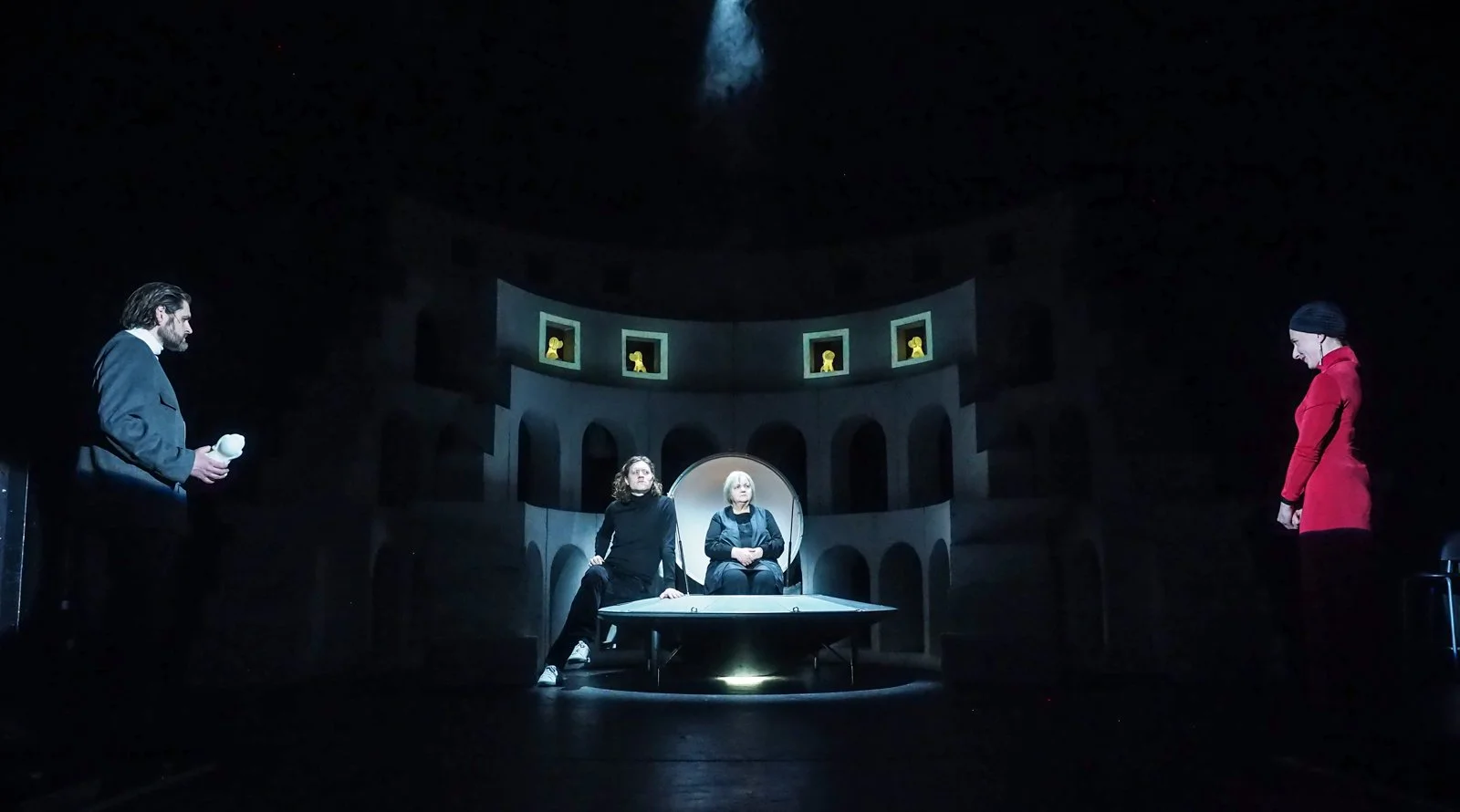
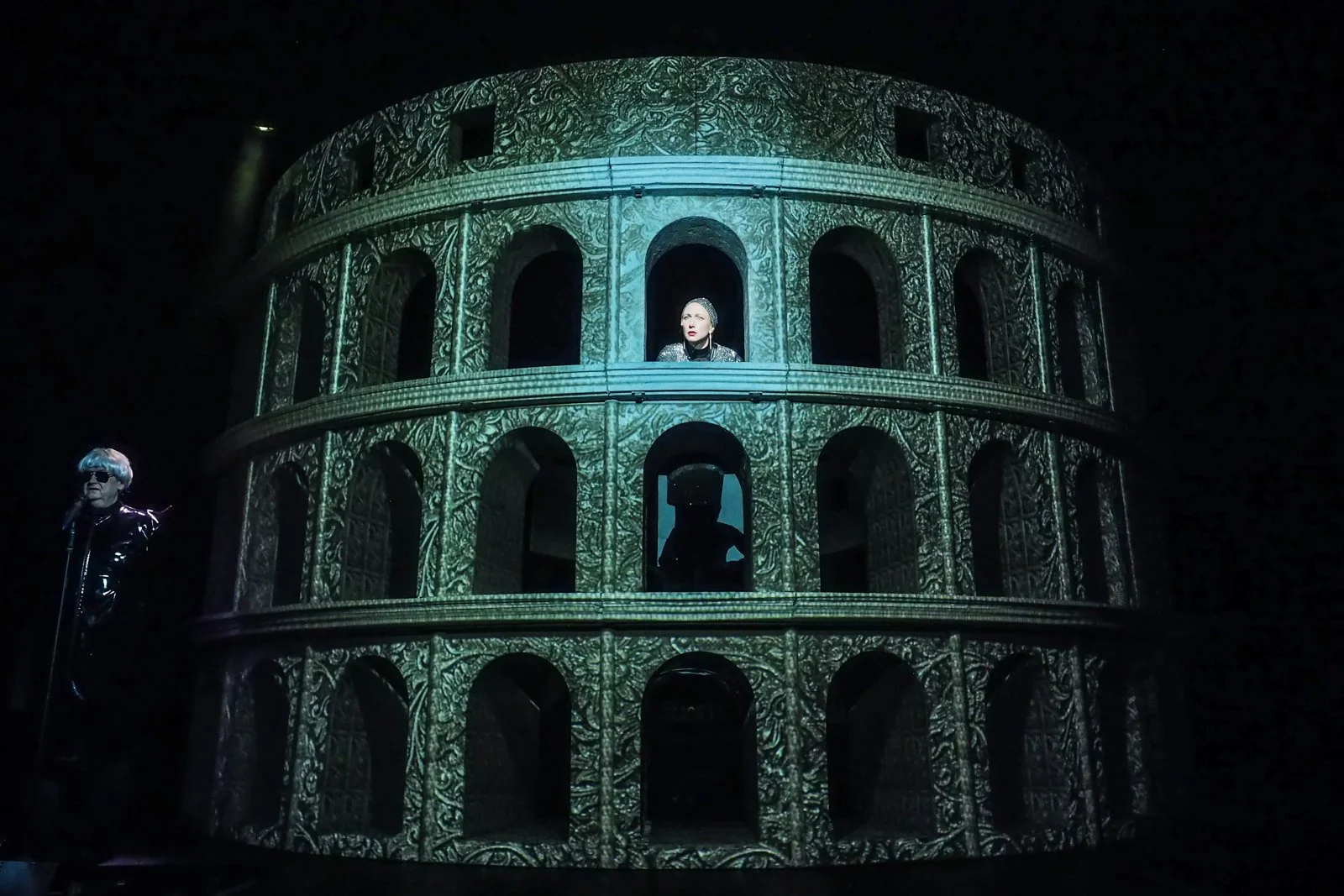
“Magda Szabó's novel The Door, directed by Ildikó Gáspár at the Örkény Theatre, is a sensitive unity of surreality and ironic, life-smelling reality, falling from the sky, creating a theatrical language about what is lost and what remains forever in a passing century that tears lives and souls apart.” https://potszekfoglalo.hu/2022/04/rendithetetlen/
“The writer Magda is played with strong mannerisms by Anna Szandtner as a diva. At the same time, in this performance, the constant, routinized posturing is able to exist simultaneously with the sincere shock, and this takes place on stage as a kind of real-time self-reflection. It is even a glimpse here of how bizarre, as a fiction, the public memorial as atonement for a crime committed against the pubic is.
Judit Pogány hardly moves, with her posture, her rigid facial expression, her whiplash accents, she creates this old woman who is stern and unyielding on the outside, but who wants to feel, to connect and to love despite her best efforts.”https://www.es.hu/cikk/2022-04-01/gergics-eniko/az-urkorszak-elmult.html
THE DOOR
Szeredás Emerenc memorial concert
Text based on the novel by Magda Szabó: Ildikó Gáspár
Music composed by Flóra Lili Matisz
Players: György Bajomi Nagy, Máté Borsi-Balogh, István Ficza, Bence Mátyássy, Bettina Józsa, Tünde Kókai, Márton Patkós, Judit Pogány, Anna Szandtner, Milán Vajda
Musician: Flóra Lili Matisz
Set: Csaba Antal, Costume: Luca Szabados, Video: András Juhász, Coreographer: Barnabás Horkay, Veronika Szabó, Light: Sándor Baumgartner, Dramaturg: Barbara Ari-Nagy, Musical Director: Árpád Kákonyi, Assistant: Diána Laky, Stage Manager: Áron Dávid
A busy young writer struggling to cope with domestic chores, hires a housekeeper recommended by a friend. Stubborn, foul-mouthed and with a flagrant disregard for her employer's opinions she may even be crazy. She allows no-one to set foot inside her house and is equally guarded about her personal life. And yet Emerence is revered as much as she is feared. As the story progresses, her energy and passion to help becomes clear, extinguishing any doubts arising out of her bizarre behaviour. After an unpromising and caustic start, benign feelings develop and ultimately the writer benefits from what becomes an inseparable relationship. Simultaneously we learn Emerence's tragic past - Hungary’s past in the 20th century - which is revealed in snapshots throughout this book.